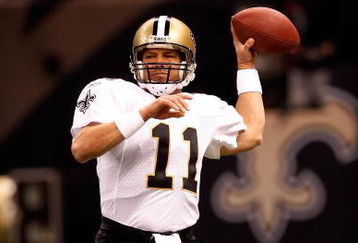
Saturday, January 16, 2010

2010 NFL Divisional Playoff Preview, Part 4: New York Jets at San Diego Chargers

New York Jets at San Diego Chargers
Favorite: Chargers (50.6%)


Team Efficiency (Using Football Outsiders' Weighted Defense-adjusted Value Over Average (DVOA)):

Jets: 10.6% (15th)... Offense DVOA: -10.4% (23rd)... Defense: -19.7% (1st)... Special: 3.4% (6th)
Chargers: 13.4% (11th)... Offense DVOA: 21.8% (5th)... Defense: 8.8% (23rd)... Special: 0.4% (16th)

So you think the Cowboys-Vikings game is too close to call? This game in San Diego is about as close to call as we'll see this weekend, as an aggressive Jets team and their #1 defense, fresh off a comfortable wildcard win over the Bengals, gets a talented offense from San Diego.

The Jets' not so talented offense, meanwhile, gets a break against a not-too-efficient San Diego defense. The Jets have better special teams, but the Chargers are at home and the Jets have to fly cross country for this game. This is basically a coin flip.


Jets Offense (with grade):

Points Per Drive: 1.56 (C-)
Drive Success Rate: .629 (C-)
Turnovers per: .165 (D+)

Offense Line Run Blocking: C+
Left End: D-
LT: C+
Interior: C
RT: A
Right End: D
Pass Protection: D+

The good news for the Jets is that San Diego's front seven blows: Their front seven is near the bottom of the league in adjusted line yards vs the run, and they're 22nd in adjusted sacks. The Jets didn't get much of a challenge from the Bengals' front seven, and they won't get much of a challenge here unless Shawne Merriman can get the front seven a shipment of Latin America's finest performance enhancers before kickoff.

Jets backfield:

QB: Mark Sanchez: F (Rushing: B-)
RB: Thomas Jones: C
RB: Shonn Greene: C

No, Mark Sanchez didn't get any better. Jets coach Rex Ryan protected him in the wildcard game with a run-centric gameplan that minimized the need for Sanchez to perform (41 of their 56 plays from scrimmage vs the Bengals were running plays, and they ran up 353 yards in 33+ minutes of possession). This week's gameplan will likely do the same. As the Chargers are a banged-up 3-4 team, the Jets can likely get by with the same gameplan.

Jets receivers:

WR: Jerricho Cotchery: C+
WR: Braylon Edwards: C
WR: David Clowney: F
WR: Brad Smith: F (Rushing: A)
TE: Dustin Keller: D

Again, the good news is that the Jets probably aren't going to need too much from this mediocre group of receivers. Just block for the tailbacks, catch some third down passes and get first downs, and maybe get a good wildcat run or three from Brad Smith.

Jets defense (Base 3-4):

Overall: A (Momentum Weighted*: A+)
Points per drive: 1.04 (A+)
Drive Success Rate: .591 (A+)
Turnovers per drive: .148 (C)

* - Weighed to emphasize late season performances over early season performances

Run Defense: B
vs left end sweeps: B
Right DE: C
Interior run defense: A
Left DE: B+
vs right end sweeps: D+

The Chargers don't do their damage with the running game, so that the Jets do a decent job of stopping it isn't a huge concern. A change-of-pace approach to running the ball could open up holes against this defense, especially to the strong side or off left tackle. But in all likelihood the Jets can contain LT and Darren Sproles.

Pass Defense: A+
Defensive line vs rush: A
Pass rush: C
vs #1 WR: A+
vs #2 WR: A
vs Other WR: A+
vs TE: A
vs RB: A

And the good news is that the Jets' strength is their ability to just shut down every aspect of the passing game. We're going to find out how good Philip Rivers really is, because he'll have to make throws and string together drives against an airtight Jets pass defense.

Jets Special Teams:

Kicker: C (Kickoffs: C)
Kick returns: B
Punting: C+
Punt returns: C+

Pedestrian group, though big kick returns from a varied cast of kick returners would help immensely with gaining whatever edge the Jets can through field position.


(Image c/o Sports by Brooks and who knows where it originated)

Chargers Offense (with grade):

Points Per Drive: 2.60 (A+)
Drive Success Rate: .742 (B+)
Turnovers per: .099 (B+)

Offense Line Run Blocking: C
Left End: D
LT: C+
Interior: D+
RT: A
Right End: C
Pass Protection: B

No offense scored more points per drive than the Chargers, while their drives ended in success more than all but three NFL teams.

It wasn't because of the run, however. The run blocking was average and, because of the scatback-size of their tailbacks, only worked when the backs ran in open space. It wasn't the line's fault, however: They're actually a solid group and helped keep a lot of pressure off Philip Rivers.

Chargers backfield:

QB: Philip Rivers: A+ (Rushing: D)
QB: Billy Volek: A-
RB: LaDanian Tomlinson: D (Receiving: Just don't)
RB: Mike Tolbert: A (Receiving: A)
RB: Darren Sproles: D (Receiving: A)
RB: Michael Bennett: F
RB: Jacob Hester: F (Receiving: Disgusting)

A host of backs couldn't manage more than garbage-time and low-leverage production on the ground. Mike Tolbert is the only one who showed an ability to grind out high leverage yards as a rusher when needed.

When it came to key yards, the group came up short on the ground, but Tolbert and Sproles did make plays on passes out of the backfield. And while Rivers is fairly durable, it's good to know that if the Chargers have to turn to backup QB Billy Volek, he can still get the job done.

Chargers receivers:

WR: Vincent Jackson: A+
WR: Malcolm Floyd: A
WR: Legedu Naanee: A
TE: Antonio Gates: A+

Well, good thing the Jets are so good at covering receivers, because the Chargers have the most talented receiving corps in the NFL. Any of these three receivers could be #1's on any team, and Antonio Gates is of course probably the best receiving tight end in the NFL. When the proverbial immovable force (Jets pass defense) meets the immovable object (Chargers pass offense), who's going to give?


(Photo c/o The Sporting Blog)

Chargers defense (Base 3-4):

Overall: D+ (Momentum Weighted*: C-)
Points Per Drive: 1.89 (C)
Drive Success Rate: .705 (D-)
Turnovers per drive: .148 (C+)

* - Weighed to emphasize late season performances over early season performances

Run Defense: C
vs left end sweeps: C-
Right DE: D
Interior run defense: D-
Left DE: B
vs right end sweeps: D-

Pass Defense: D
Defensive line vs rush: F
Pass rush: C-
vs #1 WR: C
vs #2 WR: B
vs Other WR: D
vs TE: B-
vs RB: F

If Thomas Jones was a good pass catcher, the Jets could abuse the pass-coverage-inept Chargers linebackers all day, but alas, he isn't really.

But he can easily abuse this run defense, which is quite vulnerable up the middle and to outside sweeps and... well, in general. Not sure why this front seven has such a hard time with the run, but they do. The secondary makes up for it with better convergence and gets the unit overall to at least average.

The pass defense is rather weak, which would hurt more if Rex Ryan was going to take the bubble wrap off Mark Sanchez's passing game, which he won't unless the Jets fall way behind and have to pass their way back into it, which honestly isn't likely if the Jets defense holds serve. But if he does, and Sanchez can avoid his specialty (i.e. the retarded turnover), the Jets can hope that Jerricho Crotchery can outplay the coverage. Or at least dump the ball to Thomas Jones and pray.

Chargers special teams:

Kicking: B (Kickoffs: D)
Kick returns: C
Punting: C
Punt returns: C

Nate Kaeding is a productive, reliable field goal kicker but otherwise, this is not a spectacular unit. It may come down to Kaeding's leg, though, so don't sell this advantage short.

******

So who has the edge? Does anyone?

There are X Factors all over the field in this game. The top-shelf Chargers passing game vs the top-shelf Jets pass defense. The underachieving Chargers running game against the more beatable Jets run defense. The low-grade Jets offense and their suspect rookie QB against a bad Chargers defense. The Chargers being at home but the Jets being in relatively favorable warm-weather conditions and having more personnel edges than the Chargers. The Jets' likely run-heavy game plan running right into the strongest aspect of the Chargers' weak defense. And if the Jets do have to throw, their INT-prone QB will throw into a bad Chargers pass defense and hope their decent ability to net turnovers doesn't come into play.

This is one game where I have no idea whatsoever who is going to win.

2010 NFL Divisional Playoff Preview, Part 3: Dallas Cowboys at Minnesota Vikings

Dallas Cowboys at Minnesota Vikings
Favorite: Vikings (53.0%)


Indeed, like the Ravens-Colts game, this is a much closer contest than the records indicate. The Vikings feasted on the easiest schedule in the NFL, but still had the looks of a legitimately good NFL team. Only thing is, the Cowboys are also legitimately good, going 6-2 against the NFL's top half and battling a somewhat tougher NFC East schedule en route to an 11-5 season and a surprisingly easy wildcard win over Philly.

The Cowboys have momentum but, unlike the Arizona Cardinals, they've got the weapons and performance to back it up. The Vikes struggled a bit in December: They need to make sure it's all put back together by Sunday, and even then the Cowboys have a good chance at the upset.

Team Efficiency (Using Football Outsiders' Weighted Defense-adjusted Value Over Average (DVOA)):

Cowboys: 31.2% (3rd)... Offense DVOA: 24.2% (3rd)... Defense: -0.7% (10th)... Special: 1.0% (14th)
Vikings: 17.7% (7th)... Offense DVOA: 15.2% (9th)... Defense: 1.7% (15th)... Special: 4.2% (3rd)

Both teams lean on productive and well rounded offenses to overcome average defenses. However, the Vikes have an added bonus with one of the NFL's best special teams units.


Cowboys Offense (with grade):

Points Per Drive: 2.05 (B)
Drive Success Rate: .716 (B)
Turnovers per: .052 (A-)

Offense Line Run Blocking: A-
Left End: A-
LT: B+
Interior: C
RT: C
Right End: B
Pass Protection: C

The Vikings' strong pass rush and their ability to get to the scrambling Tony Romo is key to their chances. The Cowboys do their most rushing damage with sweeps around the edges, but fortunately the Cowboys still dabble too much in running up the gut, with which they've only had average success. The Vikings need to contain the edges at all times, run or pass, to contain the Cowboys.

Cowboys Backfield:

QB: Tony Romo: A (Rushing: A+)
RB: Marion Barber III: B- (Receiving: D+)
RB: Felix Jones: B (Receiving: D)
RB: Tashard Choice: A (Receiving: A)

Tony Romo better have his running shoes on, because the Vikings' defensive line are 4th overall in adjusted sacks. Whether its the Williams brothers or Jared Allen breaking the line, Romo is going to get pressured from the pocket a bunch, and he's definitely going to need to run for cover. Can he hit his receivers on the run, or can he run off a few scrambles without getting killed?

The Cowboys can ease a lot of this concern by getting the run going, but that's easier said than done vs the #1 run defense by DVOA in the NFL. But then again, the Cowboys did pile up 198 yards against the 12th best run defense in the league, so it's not out of the realm of possibility that they could run the ball on the Vikings.

Cowboys Receivers:

WR: Miles Austin: A
WR: Patrick Crayton: B
WR: Roy Williams: D+
WR: Sam Hurd: B-
TE: Jason Witten: A-
TE: Martellus Bennett: F

Good news for Romomania: Minnesota's greatest weakness is containing receivers, ranking in the NFL's bottom half against #1 wideouts, secondary wideouts, tight ends and backfield receivers, only showing decent cover ability vs the #2 wideout. Sucks for one of Roy Williams or Patrick Crayton, maybe. Miles Austin, Roy and Crayton are all capable of big games, especially Austin: He caught 7 balls vs a tough set of Eagles corners, and the Vikings are virtual practice squadders in comparison. 100+ receiving yards should be within easy reach, especially in the climate controlled Metrodome with Romo likely having to throw 35-40 passes.

Cowboys defense (Base 3-4):

Overall: C (Momentum Weighted*: B-)

* - Weighed to emphasize late season performances over early season performances

Run Defense: B-
vs left end sweeps: B+
Right DE: C+
Interior run defense: C
Left DE: C-
vs right end sweeps: C-

The Vikings do what the Cowboys ought to, running a quarter of their rushing plays outside the tackles with their great tailbacks. Sweeps to the Cowboys' right should be containable, but the Vikes get a lot of yards off left tackle, and outside of the right edge the Cowboys are average and very beatable. Adrian Peterson and Chester Taylor have had a tough season but they could break out against this unit.

Pass Defense: C-
Defensive line vs rush: C
Pass rush: B
vs #1 WR: B
vs #2 WR: B
vs Other WR: D
vs TE: D-
vs RB: D

The Cowboys can lock up your starting wideouts, as Philadelphia (which leans on their star wideouts heavily to move the ball) found out the hard way last week. Beyond that, they can be exploited. Bernard Berrian and Sidney Rice may not be likely to post big games, but watch out for Percy Harvin (and why is he part-timing off the bench while the more pedestrian Berrian is starting? As if we need more proof that Brad Childress is a bullet in the Vikings' foot).

Also, infrequently referenced weapons like TEs Visanthe Shiancoe and Jimmy Kleinsasser could make 5-7 catches and get big yards on a weak-ish middle pass defense. Adrian Peterson is not known for his receiving but this Sunday would be a good time to get more familiar with that aspect of his game.

Cowboys Special Teams:

Kicker: D- (Kickoffs: A-)
Kick returns: D+
Punting: C
Punt returns: A-

Watch out for Patrick Crayton. Also, watch out for Shaun Suisham if the game's on the line. Pray it doesn't get that far, Wade Phillips.


Image c/o "My Fantasyland"

Vikings Offense (with grade):

Points Per Drive: 2.44 (A-)
Drive Success Rate: .724 (B)
Turnovers per: .092 (A)

Offense Line Run Blocking: C
Left End: C-
LT: B
Interior: C
RT: D
Right End: C-
Pass Protection: C

Adrian Peterson's had better seasons (18 regular season TDs aside) but he's not getting a ton of help from his line. Brett Favre's also working behind average pass protection: Good thing he scrambles well and can get rid of the ball quickly. Also, good thing the Cowboys' front seven is average at best vs the run and fairly beatable by secondary receivers.

Also, one thing not to expect from either offense is turnovers. Both teams are in the top 3 in the NFL of fewest turnovers per drive. The oft-cited turnover problems on each team, Dallas' Tony Romo and Minnesota's Adrian Peterson, have cut down on their turnovers this season.

Vikings backfield:

QB: Brett Favre: A+
QB: Tavaris Jackson: A
RB: Adrian Peterson: C (Receiving: B)
RB: Chester Taylor: F (Receiving: B)

As much as he is loathed and/or revered, Brett Favre is still to this day one of the NFL's best quarterbacks.

1300+ yards and 18 TDs by Peterson are enough to make you question FO's DVOA rating system for tailbacks, but by their numbers the Vikings' backs have not been as marginally productive as other backs. That said, the backs are good receivers, which plays right into the Cowboys' weaknesses on defense. Even if the Cowboys can contain the run (not an assured outcome), the backs could net big gains as valve targets if Favre is pressured, or even on set short-range plays as primary receivers.

Vikings receivers:

WR: Sidney Rice: A+ (Rushing: A)
WR: Percy Harvin: B
WR: Bernard Berrian: C
WR: Greg Lewis: C+
TE: Visanthe Shaincoe: A
TE: Jimmy Kleinsasser: I thought you did this for a living

The numbers tell us the Cowboys can only cover two of these guys. They'll definitely lock on Rice. Do they lock on nominal #2 Bernard Berrian, or do they buy the hype and put a body on Harvin, even if he's run out of the slot? They'd be smart to do the latter and force Favre to beat them with Berrian, overtargeting Shiancoe and trying to find the tailbacks in space again and again.

Vikings defense (Base 4-3):

Overall: C (Momentum Weighted*: C+)

* - Weighed to emphasize late season performances over early season performances

Run Defense: A
vs left end sweeps: D+
Right DE: B-
Interior run defense: B
Left DE: B-
vs right end sweeps: A

How does a team get an A on overall run defense while their front line averages about a B? Well, because the linebacking and secondary is also part of the run defense, and they do a fine job of closing in and helping contain opposing rushers, especially to the strong side. The line's consistentcy with interior runs also helps, of course. The Cowboys' ability to run is going to come down to the one thing the running game does well: Sweeping to the outside and finding open space at the line of scrimmage. Lead blocks aren't going to help much against this quick front seven.

Pass Defense: D
Defensive line vs rush: B
Pass rush: B+
vs #1 WR: D
vs #2 WR: B
vs Other WR: D
vs TE: D
vs RB: C-

Though the Vikings have an excellent run defense and pass rush, they are exploitable in the secondary, and if Tony Romo doesn't get crushed by that front four or suffer a relapse of the turnover bug, he's going to throw for 300+ yards and this could be, like the Packers-Cards game, a shootout that comes down to who scores last.

Vikings Special Teams:

Kicking: B (Kickoffs: D)
Kick returns: A+
Punting: C
Punt returns: C+

Aiding that likelihood is Percy Harvin's danger as a kick returner. Even if Romomania leads a scoring drive, Harvin could take the opening kickoff deep downfield, at worst shortening the distance Favre and Co need to travel to respond with a score, but also possible that he breaks a run for a touchdown.

Punter Chris Kluwe does not provide bang for his league leading $5 million annual contract, as his punting has actually been around league average. Whoops! Meanwhile, Ryan Longwell has missed only two field goals all year, one from 30-39 and one from 40-49, while nailing two 50+ yarders. He's not the liability the Cowboys have at kicker.

******

So who has the edge?

I have a friend who put money on the Minnesota Vikings to get to the Super Bowl. I'd like to put his mind at ease by saying the Vikes are likely to win, but I'd be lying: Be very afraid, not because the Vikes are underdogs, because after all is said and done they are still favorites, but only slight favorites. The Vikes have enough weaknesses that play into the Cowboys strengths to make this a nailbiter. Thankfully, the Cowboys also have weaknesses that the Vikings can exploit as well.

If someone put a gun to my head and told me to pick a winner, I'd pick the Vikings, then spend the game writing my last will and testament just in case.

2010 NFL Divisional Playoff Preview, Part 2: Baltimore Ravens at Indianapolis Colts

Baltimore Ravens at Indianapolis Colts
Favorite: Ravens (54.6%)


Yes, that's right, the Ravens are actually a slight favorite over the Colts, despite being a 6 seed to the Colts' 1 seed and playing this game in Lucas Oil Stadium. Sagarin's Predictor ratings:

Baltimore: 29.24
Indianapolis: 25.48

Even factoring in the 2.53 home field advantage, Indy is a slight underdog despite having an overall higher Sagarin rating (27.88 to Baltimore's 26.54). Simply put, the Ravens posted a 10-7 record against tougher competition. While the Colts did go 5-1 vs the league's top half compared to the Ravens' 3-7, that the Ravens had more games vs the top half and bigger wins vs tougher competition via scoring margin than the Colts did gives them a ratings edge.

A closer look could confirm this.

Team Efficiency (Using Football Outsiders' Weighted Defense-adjusted Value Over Average (DVOA)... as of the end of the regular season):

Ravens: 32.5% (1st)... Offense DVOA: 16.9% (8th)... Defense: -13.6% (3rd)... Special: 2.0% (8th)
Colts: 17.1% (8th)... Offense DVOA: 19.6% (6th)... Defense: 1.8% (16th)... Special: -0.6% (20th)

The overall efficiency ratings confirm that the Colts aren't as tough as the 14-2 record indicates... though some will argue that quitting on their last two games may have dragged their ratings down, a look at their schedule shows that many of their 14 wins were too close for comfort.

Week 1: 14-12 win over Jacksonville
Week 2: 27-23 win over Miami
Week 8: 18-14 win over San Francisco
Week 9: 20-17 win over Houston
Week 10: 35-34 win over New England
Week 11: 17-15 win over this same Baltimore team
Week 12: 35-27 win over Houston
Week 15: 35-31 win over Jacksonville

And then the two capitulate losses to the Jets and lowly Buffalo. The Colts were not a dominating 14-2 team... more likely a 9-7 or 10-6 team that happened to win all their tight games before conceding their last two games. Baltimore can beat this sort of team... and almost did in Week 11.


Ravens Offense (with grade):

Points Per Drive: 2.03 (B)
Drive Success Rate: .702 (C)
Turnovers per: .112 (B)

Offense Line Run Blocking: B+
Left End: C
LT: C
Interior: B
RT: C
Right End: A+
Pass Protection: C

This is a traditional offense that establishes the run to set up pass plays and emphasizes winning the trench battle: Only seven teams ran a higher percentage of plays between the tackles than the Ravens' 55%. Of thosse teams, only the San Diego Chargers are still alive in the playoffs.

With the strength and speed of today's NFL defenses, it's very hard to do this consistently well, but the Ravens do it being a strong offensive line, a trio of fine tailbacks and enough of a threat from the passing game to keep the opposing front seven honest.

Ravens Backfield:

QB: Joe Flacco: B (Rushing: F)
RB: Ray Rice: B+ (Receiving: B)
RB: Willis McGahee: B+ (Receiving: D)
RB: LeRon McClain: B (Receiving: C)

Baltimore rotates action between these three tailbacks, but the most productive of the bunch has been Ray Rice, who has slowly worked his way into feature back status and the NFL's upper echelon of tailbacks, similar to the career path of an undersized but persistent, durable and hard working tailback from the University of Florida named Emmitt Smith.

Joe Flacco has his hot games and cold games, but he did go 23 for 35 and 256 yards against the so-so Colts defense in Week 11, in Baltimore. He'll be on the road in hostile territory this time, sure, but he'll also be under a roof. His career 83.5 rating in road games (with 19 TDs and 13 picks) indicates he can handle himself in a big road game.

Ravens receivers:

WR: Derrick Mason: C (Running plays: A+)
WR: Mark Clayton: D-
WR: Kelley Washington: A
WR: Demetrius Williams: B+
TE: Todd Heap: A

The veteran Mason has slipped a bit physically and QB Joe Flacco's accuracy is still a work in progress, but he's still a key piece of this passing game when the Ravens do drop back to throw. The playmaker of the bunch is Kelley Washington: Whether or not the Ravens realize it enough to use him as more than a change of pace slot receiver and/or slide him ahead of overrated Mark Clayton on the depth chart remains to be seen. Demetrius Williams has also been productive over a small sample size: Whether or not he's money with more targets remains to be seen. Todd Heap is not just a possession target for Flacco but a fine, productive receiving TE of his own right.

Ravens defense (Base 3-4):

Overall: B+ (Momentum Weighted*: B)
Points per drive: 1.36 (B+)
Drive success rate: .642 (B+)
Turnovers per drive: .171 (B)

* - Weighed to emphasize late season performances over early season performances

Run Defense: B+
vs left end sweeps: B
Right DE: B+
Interior run defense: C
Left DE: A
vs right end sweeps: A-

Pass Defense: B
Defensive line vs rush: A+
Pass rush: D
vs #1 WR: A
vs #2 WR C+
vs Other WR: D+
vs TE: A+
vs RB: A

Whether or not they've slipped from elite status, the Ravens still sport a very good, very efficient defense against which opposing offenses can't consistently move the ball. Only the Jets, 49ers and Vikings were more effective at shutting down drives, and only the Jets and Niners allowed a lower percentage of TDs per drive. The Ravens are among the best at shutting down the opponent's #1 receiver, their backfield receivers and their tight end. Peyton Manning's best chance for a big game will be to somehow convince the defense he's looking for Reggie Wayne and Dallas Clark, and then smoke and mirror his way to Pierre Garcon and Austin Collie. That and hope that maybe they can win the trench war with Joseph Addai-


... uh, nevermind.

Despite their aggressive defensive reputation, the Ravens actually sport a relatively poor sack total. They didn't sack Peyton Manning in Week 11 and I wouldn't be surprised if they failed to do so again. However, they did pick off Manning twice.

Ravens Special Teams:

Kicker: C- (Kickoffs: B+)
Kick returns: B+
Punting: C
Punt returns: C

The Ravens can spike their chances of building a lead on the Colts with big returns from Jalen Parmele, Ladarius Webb and Chris Carr, who fuel a kick return game averaging 26.2 yards per return. Big kickoffs from Billy Cundiff when the Ravens do score will also help. Peyton Manning's going to have a hard enough time scoring touchdowns on the Ravens defense without having to go 80 yards to do it.


Colts Offense (with grade):

Points Per Drive: 2.43 (B+)
Drive Success Rate: .748 (A+)
Turnovers per: .140 (C)

Offense Line Run Blocking: D+
Left End: F
LT: C
Interior: B-
RT: C
Right End: C
Pass Protection: A+

The Colts could really use some production from Joseph Addai, but it's not looking likely. On the flip side, Peyton Manning has combined with his offensive line to take the fewest adjusted sacks in the NFL. One positive harbinger: On 31 pass plays, the Ravens did not sack Manning in the Colts' week 11 victory over the Ravens.

Colts Backfield:

QB: Peyton Manning: A+
RB: Joseph Addai: B- (Receiving: B)
RB: Mike Hart: D
RB: Donald Brown: D (Receiving: A)

The Colts' offense has struggled more lately because it HAS been all about Peyton Manning and the passing game. Joseph Addai is the only real rushing threat and even he's not especially great on average... just decent. The Ravens had no trouble containing the Colts running game in week 11 (76 total yards) and probably won't today.

Colts Receivers:

WR: Reggie Wayne: B
WR: Austin Collie: B
WR: Pierre Garcon: C
WR: Hank Baskett: F
TE: Dallas Clark: A
TE: Tom Santi: B
TE: Jacob Tamme: F

The Ravens can probably take away half of Peyton Manning's weapons. Peyton's ability to utilize his secondary receivers (Collie, Garcon, Tom Santi in 2-TE sets) will be the key to the Colts' chances of taking down the Ravens. They can probably win this game with three touchdown drives: Do they have three touchdown drives in them?

Colts defense (Base 4-3):

Overall: C (Momentum Weighted*: C+)

* - Weighed to emphasize late season performances over early season performances

Run Defense: C
vs left end sweeps: C
Right DE: D-
Interior run defense: C
Left DE: D
vs right end sweeps: F

They contained the Ravens running game in Week 11 (98 ground out yards), but does this porous front seven repeat the feat this weekend? If they don't, the Colts are rusty on offense from their three week vacation and the Ravens D holds serve vs Peyton Manning, this could get ugly.

Pass Defense: C
Defensive line vs rush: D-
Pass rush: C
vs #1 WR: C
vs #2 WR: D+
vs Other WR: C
vs TE: C
vs RB: C-

The Ravens don't have a prolific passing game, but they managed to move the ball on this pedestrian Colts pass defense, and inside the Oil Warehouse they could repeat the feat. The Colts are poor enough at covering the #2 wideout that Mark Clayton could have a good game despite himself. If the Ravens plug in someone else alongside Derrick Mason, however, that player's going to have a massive game.

Colts Special Teams:

Kicker: C (Kickoffs: C)
Kick returns: C
Punting: C+
Punt returns: D+

Don't expect any miracles from this okay-ish unit.

******

So who has the edge?

Even the money's not following the supposedly favored Colts. Vegas Insider reports 64% of moneyline bettors have chosen the Ravens to win straight up (no pointspread, and the Ravens are a 6.5 point underdog), and that when betting opened the vast majority of bettors, over 95%, were picking the Ravens.

Part of that was motivated by the Colts' laydown and their history of failure when they clinch home field and pack it in the last couple weeks. Part of that was from the Ravens playing the Colts tough in Week 11 and knowing that hard-nosed defense can shorten the game and cut the outcome down to a handful of scores. And part of that is from the realization that the Colts' smoke and mirrored their way to 14 wins by managing to win a bunch of close games, and the laydown by their backups in Weeks 16 and 17 show that they don't have a lot of depth.

A close look at the stats support those shallow biases. The Ravens have the all-around defensive ability to contain a limited Colts offense that has to lean a little too heavily on the pass game, a contrast to prior great Colts teams that had a better run-pass balance. The Colts' historically so-so defense remains so this season, and the Ravens have the tools to move the ball on this so-so bunch, even if they struggled to run the ball in week 11. They also have a strong kick return game that can help them win the field position battle.

Fans are sniffing an upset, and their noses aren't fooling them.

Friday, January 15, 2010

2010 NFL Divisional Playoff Preview, Part 1: Arizona Cardinals at New Orleans Saints

Arizona Cardinals at New Orleans Saints
Favorite: Saints (80.8%)


Last week the Cards teamed with the Packers to obliterate NFL postseason records before a lucky break on defense helped them seal the deal on a 51-45 overtime victory. Discouraging to indications that the Cards can repeat this Saturday with a win vs the Saints was that, despite predictably getting to Aaron Rodgers for five sacks, an opening-play pick and the closing fumble and TD, the defense allowed him to torch their secondary for 422 yards while the Packers running game gained another 90 despite minimal use (20 total rushes, including three Rodgers scrambles, vs 47 pass plays).

Granted, the Packers have the 4th best offense in the NFL per Football Outsiders' DVOA ratings, so yeah they were very likely to have the day they had last week... but the forthcoming Saints have the #2 offense in DVOA, and an offense much more well known for torching defenses, especially in the Superdome where this game will take place. They will likely repeat the feat and torch the Cards for big points... plus Drew Brees doesn't hold the ball like Rodgers does (in fact, the Saints have allowed the 4th fewest adjusted sacks in the NFL), so it's not likely the Cards can manage five sacks or even a turnover.

On the flip side, that the Cards rang up 531 yards of their own against the 2nd best defense in the NFL bodes well given the Saints' D is a much more mediocre 14th. However, the Cards have consistency issues and were clearly clicking on offense while playing in their own domed stadium. Now they're going into a hostile road dome where the crowd's not going to let Kurt Warner call plays without ear-splitting noise. Do the Cards come out on fire again, on the road, against the prohibitive favorite to get to the Super Bowl, which BTW has a prolific offense of their own? Highly doubtful. Could happen (remember that the Cards did well on the road this season), but doubtful.

Team Efficiency (Using FO's Weighted Defense-adjusted Value Over Average (DVOA)... as of the end of the regular season):

Cardinals: 10.5% (13th)... Offense DVOA: 8.8% (13th)... Defense: -0.1% (12th)... Special: 1.6% (11th)
Saints: 23.4% (6th)... Offense DVOA: 27.6% (2nd)... Defense: 1.3% (14th)... Special: -2.8% (28th)


Cardinals Offense (with grade):

Points Per Drive: 1.84 (C)
Drive Success Rate: .679 (C)
Turnovers per: .176 (F)

Offense Line Run Blocking: C
Left End: A
LT: C
Interior: C-
RT: C+
Right End: C-
Pass Protection: Conditional B

As mentioned last week, Arizona gets a conditional B because Kurt Warner has an amazingly quick release, which offsets any shortcomings in the pass protection. If the run blocking is any indication, the line is probably more like a Grade C pocket than a Grade B.

The good news is that, like the Packers, the Saints are an average-ish pass rushing team, and Warner only got sacked once in last week's tilt. And per adjusted line yards, the Saints are not as good against the run as the Packers are... not even close. The Cards still managed 156 yards on the ground last week. They could be good for that and more vs the Saints, especially if they get a two score lead and Ken Whisenhunt (wisely) elects to work the clock, keep the ball away from that prolific Saints offense and protect the ball on subsequent drives.

Cardinals backfield:

QB: Kurt Warner: B+ (Religious Obsession: A++++)
RB: Beanie Wells: C (Receiving: A)
RB: Tim Hightower: D+ (Receiving: B- ... Touchdown Vulturing: A)

Beanie looked more like a B vs the Packers, though Warner's propensity for torching that secondary may have set up many of those yards in making every subsequent run play a glorified draw play. That said, the rushers themselves aren't incredible and will serve more to help the Cards grind the clock and convert the occasional short yardage situation than move the football.

Warner, of course, still turns to his Arena Football roots, firing quickly and often to take what he can get while he has openings. And the Saints are going to give him plenty on defense.

Cardinals receivers:

WR: Larry Fitzgerald: B
WR: Steve Breaston: B
WR: Anquan Boldin: C
WR: Early Doucet: B
WR: Jerheme Urban: D
TE: Ben Patrick: A
TE: Anthony Becht: D
TE: Stephen Spach: F

Too many weapons, even though some of them suck and aren't good for more than change-of-pace targets. But there's no way the Saints can keep them all covered: They can lock down whoever they decide is the #1 receiver, but that's essentially it. One of the B's will go off for 100+ yards. Last week it was Early Doucet. Who will it be this week?

Do the Saints believe the hype and decide the lockdown target is Doucet, opening up Fitzgerald? Does Fitz get the bullseye, allowing Doucet go off again and start building a playoff legend? Do the Saints lock Fitzgerald, while they get a couple guys on Doucet... and open the door for Steve Breaston to have a massive game? Do all three get bumped and run to death, opening the door for a career game from TE Ben Patrick? Does Tim Hightower channel Larry Centers out of the backfield and go off on a 20 catch, 150 yard game? Who knows, but someone in that receiving corps will have a massive game in the Superdome.

Cardinals defense (Base 3-4):

Overall: C (Momentum Weighted*: C)
Points per drive: 1.56 (C+)
Drive success rate: .647 (B)
Turnovers per drive: .140 (C)

* - Weighed to emphasize late season performances over early season performances

Run Defense: B-
vs left end sweeps: C
Right DE: C
Interior run defense: C
Left DE: A-
vs right end sweeps: C

One thing the Cards can do with some consistency is stop the run, so don't expect a massive game from Pierre Thomas or Reggie Bush... though the Saints are a great run blocking team so it could happen. The decent run defense, however, is one reason Aaron Rodgers got the ball much of the time and got to go crazy. Drew Brees will likely repeat the effort and the Saints will likely just gun it against the Cards defense.

Pass Defense: B
Defensive line vs rush: C+
Pass rush: C+
vs #1 WR: D
vs #2 WR: A+
vs Other WR: B
vs TE: C
vs RB: C

Aaron Rodgers and the top shelf Packers offense shredded the Cards secondary, and there's little doubt the Saints can do the same. The Cards put up good numbers vs teams' secondary options because they tend to leave the #1 on an island and allow him to go off. Indeed, Greg Jennings blew past 100 yards on 8 catches, and Marques Colston is even more dangerous. Defending the tight end is also not their strong suit, and Jermichael Finley is peanuts as a TE compared to Jeremy Shockey. The Cards also don't defend backfield receivers all that great, and Reggie Bush is as dangerous from the backfield as tailbacks get. Drew Brees could easily throw for 500 yards if this game remains competitive into the 2nd half.

Cardinals Special Teams:

Kicker: C+ (Kickoffs: C)
Kick returns: C
Punting: A-
Punt returns: D+

It didn't come down to the kicking game, obviously, vs the Pack, but this game will definitely be a tougher matchup for the Cards. If the offense doesn't click this week, Ben Graham's coffin-corner ability as a punter is going to be very, very important, as forcing repeated 90 yard drives may be the Cards' only chance in hell of stopping the Saints offense. At least Neil Rackers gets to kick in a dome again.


Saints offense:

Points Per Drive: 2.56 (A)
Drive Success Rate: .742 (A-)
Turnovers per: .148 (C)

Offense Line Run Blocking: A
Left End: C-
LT: C
Interior: A
RT: B+
Right End: A-
Pass Protection: B+

This is pretty much the polar opposite of the situation the Cards front seven had with the Packers, with a great offensive line, a fast backfield and a fire-away QB who has no problem getting the ball away quickly. Don't expect five sacks. In fact, the Cards are in big trouble because their one strength is getting pressure on the QB and the Saints front line and offensive style pretty much makes that close to impossible.

The Cards do have some hope in that their strength vs the run is along left DE, which happens to be one of the Saints' stronger points, so neutralizing right off-tackle runs could give them a chance to contain the backfield. That still leaves Brees, his excellent pass protection and his host of passing weapons, though.

Saints Backfield:

QB: Drew Brees: A+ (Rushing: A+)
RB: Pierre Thomas: A (Receiving: A-)
RB: Mike Bell: C
RB: Reggie Bush: A (Receiving: C)

Okay, that backfield is ridiculous. If they get traction against the Cards' front seven and the Cards aren't firing at 110% capacity like last week, this is over in one and a half quarters.

Saints Receivers:

WR: Marques Colston: A
WR: Robert Meachem: A+ (Rushing: A+)
WR: Devery Henderson: B
WR: Lance Moore: A
TE: Jeremy Shockey: A
TE: David Thomas: B-

The only reason I now feel wrong about the Drew Brees 500 yard estimate as I type this is that I now see that estimate might have been a bit conservative.

Saints Defense (Base 4-3):

Overall: C (Momentum Weighted*: D+)
Points per drive: 1.71 (C)
Drive success rate: .670 (C)
Turnovers per drive: .187 (A-)

* - Weighed to emphasize late season performances over early season performances

Run Defense: D-
vs left end sweeps: D-
Right DE: F
Interior run defense: C
Left DE: C
vs right end sweeps: A+

Yeah, I'm not sure what's up with the right side of the Saints' defensive line, but they can be run over. Again, the Cards best hope is to strike quick, get a lead, and then try to kill the clock by running it down their throats... which can be done against this mediocre run defense.

The Saints, however, have had better fortune than most with turnovers, subject as always to variance but there could be a ballhawking mentality to them. If the backers can step in front of a couple of Kurt Warner bullets or a blitzer can get to him and knock the ball from his smallish hands, getting a two TD lead on the Saints may be far easier said than done. In fact, a timely turnover or three could help put this game on ice quickly.

Pass Defense: C+
Defensive line vs rush: C-
Pass rush: C
vs #1 WR: A
vs #2 WR: C-
vs Other WR: C
vs TE: B
vs RB: C

The Saints can defend the strong side well, so while I boasted the possibility Ben Patrick likely won't blow up on the Saints for a big game. But any of the receivers could unload for big yards, possibly multiple receivers. The Saints do a fine job of locking down a key target, but they can be exploited by a team with several receiving weapons, as the Cards have.

Saints Special Teams:

Kicking: D- (Kickoffs: C)
Kick returns: B
Punting: D
Punt returns: D

Yeah, well, it's a good thing the Saints score a crapton of points and their crappy special teams don't matter.

******

So who has the edge?

I haven't made it much of a secret, but the Cards aren't going to see many of the advantages they had with the Pack, and that game was awfully close. The Saints have just as much firepower on offense, in fact way more, and the Cards are now in a hostile dome against a ballhawking defense, with the added caveat that Kurt Warner is as prone to big turnover games as he is to big passing games.

Unless the Cards successfully exploit the Saints defense without any miscues without missing a beat from last week's explosion, the Saints are probably going to humble the Cards on Saturday, ensuring we have a new NFC Champion in 2010.

Sunday, January 10, 2010

2010 NFL Wildcard Playoff Preview, Part 4: Green Bay Packers at Arizona Cardinals

Like the previous preview, this is going to be quick and dirty with ratings only... a couple key thoughts thrown in. I will note that of the 12 playoff teams, the Cards are the lowest rated in several categories on the board, and if they weren't at home the Pack would be a tremendous favorite to win, rather than the mere decent favorite they are in traveling to Glendale.

The key for the Cards, aside from some requisite big plays on offense, will be to win the field position battle on special teams (which is very possible as Cards punter Ben Graham is one of the NFL's best punters) and try to pin Aaron Rodgers back, forcing the Pack to drive the length of the field to score again and again. If they can get Pack drives to stall outside the 25 yard line, they've got a good chance as Mason Crosby is one of the NFL's worst kickers... though being indoors may help him.

Green Bay Packers at Arizona Cardinals
Favorite: Packers (67.6%)

Team Efficiency (Using FO's Weighted Defense-adjusted Value Over Average (DVOA)):

Packers: 30.3% (2nd)... Offense DVOA: 22.5% (4th)... Defense: -14.0% (2nd)... Special: -6.2% (32nd)
Cardinals: 10.5% (13th)... Offense DVOA: 8.8% (13th)... Defense: -0.1% (12th)... Special: 1.6% (11th)


Packers Offense (with grade):

Points Per Drive: 2.33 (A)
Drive Success Rate: .665 (C)
Turnovers per: .107 (B)

Offense Line Run Blocking: B-
Left End: F
LT: C-
Interior: A+
RT: C
Right End: B+
Pass Protection: Conditional F*

The Conditional F: Green Bay ranked near the bottom in adjusted sacks... but Aaron Rodgers also had a documented problem with staying in the pocket for far too long, which obviously facilitated more sacks. The run blocking numbers indicate parts of the line need work, and with a less hesitant QB the numbers may still be below average, but I'm going to label the F as conditional. The evidence indicates this isn't a Grade F pass blocking group.

QB: Aaron Rodgers: A (Rushing: A+... Camping in Pocket: A++)
RB: Ryan Grant: B (Receiving: B)
RB: Ahman Green: C
RB: Brandon Jackson: D (Receiving: A+)

WR: Donald Driver: B
WR: Greg Jennings: B
WR: James Jones: C-
WR: Jordy Nelson: A+
TE: Jermichael Finley: A
TE: Donald Lee: F
TE: Spencer Havner: A

Packers defense (Base 3-4):

Overall: B (Momentum Weighted*: A)

* - Weighed to emphasize late season performances over early season performances

Run Defense: B-
vs left end sweeps: C
Right DE: C
Interior run defense: A-
Left DE: C+
vs right end sweeps: B

Pass Defense: B
Defensive line vs rush: A-
Pass rush: C
vs #1 WR: A+
vs #2 WR: C+
vs Other WR: B+
vs TE: A
vs RB: B

Packers Special Teams:

Kicker: D (Kickoffs: D)
Kick returns: C-
Punting: F
Punt returns: C

******


Cardinals Offense (with grade):

Points Per Drive: 1.84 (C)
Drive Success Rate: .679 (C)
Turnovers per: .176 (F)

Offense Line Run Blocking: C
Left End: A
LT: C
Interior: C-
RT: C+
Right End: C-
Pass Protection: Conditional B

Likewise, Arizona gets a conditional B because Kurt Warner has an amazingly quick releases, which offsets any shortcomings in the pass protection. If the run blocking is any indication, the line is probably more like a Grade C pocket than a Grade B.

QB: Kurt Warner: B+ (Religious Obsession: A++++)
RB: Beanie Wells: C (Receiving: A)
RB: Tim Hightower: D+ (Receiving: B- ... Touchdown Vulturing: A)

Also watch out for Larod Stephens-Howling, who has caught a few passes out of the backfield for the Cards this season. He's not that great, though.

WR: Larry Fitzgerald: B
WR: Steve Breaston: B
WR: Anquan Boldin: C
WR: Early Doucet: B
WR: Jerheme Urban: D
TE: Ben Patrick: A
TE: Anthony Becht: D
TE: Stephen Spach: F

Cardinals defense (Base 3-4):

Overall: C (Momentum Weighted*: C)

* - Weighed to emphasize late season performances over early season performances

Run Defense: B-
vs left end sweeps: C
Right DE: C
Interior run defense: C
Left DE: A-
vs right end sweeps: C

Pass Defense: B
Defensive line vs rush: C+
Pass rush: C+
vs #1 WR: D
vs #2 WR: A+
vs Other WR: B
vs TE: C
vs RB: C

Cardinals Special Teams:

Kicker: C+ (Kickoffs: C)
Kick returns: C
Punting: A-
Punt returns: D+

2010 NFL Wildcard Playoff Preview, Part 3: Ravens at Patriots

I'm pressed for time so the following will be quick and dirty, with ratings only. The only quick thought I'll offer is that the Sagarin ratings ignore two key factors: The Patriots defense has a lot of holes, and added to the loss of Tom Brady's favorite receiver Wes Welker, this could go the other way, and badly.

Baltimore Ravens at New England Patriots
Favorite: Patriots (68.7%)

Team Efficiency (Using FO's Weighted Defense-adjusted Value Over Average (DVOA)):

Ravens: 32.5% (1st)... Offense DVOA: 16.9% (8th)... Defense: -13.6% (3rd)... Special: 2.0% (8th)
Patriots: 28.3% (4th)... Offense DVOA: 29.7% (1st)... Defense: 2.6% (17th)... Special: 1.2% (13th)


Ravens Offense (with grade):

Points Per Drive: 2.03 (B)
Drive Success Rate: .702 (C)
Turnovers per: .112 (B)

Offense Line Run Blocking: B+
Left End: C
LT: C
Interior: B
RT: C
Right End: A+
Pass Protection: C

QB: Joe Flacco: B (Rushing: F)
RB: Ray Rice: B+ (Receiving: B)
RB: Willis McGahee: B+ (Receiving: D)
RB: LeRon McClain: B (Receiving: C)

WR: Derrick Mason: C (Running plays: A+)
WR: Mark Clayton: D-
WR: Kelly Washington: A
WR: Demetrius Williams: B+
TE: Todd Heap: A

Ravens defense (Base 3-4):

Overall: B+ (Momentum Weighted*: B)

* - Weighed to emphasize late season performances over early season performances

Run Defense: B+
vs left end sweeps: B
Right DE: B+
Interior run defense: C
Left DE: A
vs right end sweeps: A-

Pass Defense: B
Defensive line vs rush: A+
Pass rush: D
vs #1 WR: A
vs #2 WR C+
vs Other WR: D+
vs TE: A+
vs RB: A

Ravens Special Teams:

Kicker: C- (Kickoffs: B+)
Kick returns: B+
Punting: C
Punt returns: C


Patriots Offense (with grade):

Points Per Drive: 2.34 (B+)
Drive Success Rate: .746 (A)
Turnovers per: .126 (C)

Offense Line Run Blocking: B
Left End: C+
LT: C
Interior: B+
RT: C-
Right End: D+
Pass Protection: A

QB: Tom Brady: A+ (Rushing: F)
RB: Laurence Maroney: C (Receiving: C)
RB: Kevin Faulk: A+ (Receiving: C)
RB: Fred Taylor: A
RB: Sammy Morris: C- (Receiving: A)
RB: Benjarvus Green-Ellis: C

WR: (The Injured) Wes Welker: A- (Current knee structure: F)
WR: Randy Moss: A (Consistent determination to win: C-)
WR: Julian Edelman: C
WR: Sam Aiken: D+
WR: Joey Galloway: Please retire
TE: Ben Watson: A+
TE: Chris Baker: A

Patriots defense (Base 3-4):

Overall: C (Momentum Weighted*: C)

* - Weighed to emphasize late season performances over early season performances

Run Defense: B-
vs left end sweeps: C
Right DE: A-
Interior run defense: F
Left DE: C
vs right end sweeps: D-

Pass Defense: D+
Defensive line vs rush: D
Pass rush: C
vs #1 WR: D
vs #2 WR: B
vs Other WR: B-
vs TE: D
vs RB: D

Patriots Special Teams:

Kicker: C (Kickoffs: B)
Kick returns: D+
Punting: D
Punt returns: A

Friday, January 8, 2010

The biggest concern with the Seahawks hiring Pete Carroll


Just 24 hours after dismissing head coach Jim Mora, the Seattle Seahawks are poised to hire current USC head coach Pete Carroll as not only their new head coach, but as dual general manager.

Now, let's never mind Carroll's okay-ish 33-31 record in two uninspiring NFL coaching jobs during the 1990's (Jets 1994, Patriots 1997-1999). Let's never mind that no NFL offense under Carroll ever finished higher than 11th in the league in total yards despite a talented offense led by Drew Bledsoe during his last three seasons, that only once did his offense or defense finish in the NFL's 10 top in yards gained/allowed any season (New England's defense did during his final year), or that his NFL teams' running games always finished in the bottom half of in the league (16th, 26th, 27th and 23rd in yards, respectively).

Let's never mind that Carroll inflated his current reputation with a comfortable USC gig where he always has recruiting access to some of the finest HS and JuCo football talent in the nation, let alone top recruits who want to play for USC badly enough to fall into his lap... working in one of college football's most prestigious and high profile schools, not to mention one with a vast amount of resources at the coach's disposal, and thus a place where it's very easy for a competent college coach to step in and quickly build a dominant program.

Let's never mind this fine USC career all came on the heels of replacing the overwhelmed Paul Hackett, an NFL offensive coordinator who save for a two year stint coaching small time UC Davis had never been the head coach for any team at any level, and who could do no better than .500 football despite a wealth of talent falling into his lap every year... and that as long as Carroll was capable, he would easily exceed Hackett's accomplishments and come out looking like a better coach, let alone look like a great coach when all those top recruiting classes produced 10-14 win season after 10-14 win season, with the occasional BCS title thrown in.

Let's never mind that the Seahawks brass bought into an inflated reputation and forgot the history of accomplished D-1 NCAA head coaches who have jumped to the NFL and floundered, forgetting that the list of such coaches in the modern era who have successfully made the jump and had a long, accomplished career consists of Jimmy Johnson, Bill Walsh (MAYBE John Robinson if you decide Super Bowls don't matter) and about 10 inches of empty space on the page... and that the list of failures and forgotten mediocrities is far longer.

******

No, the real concern with the Seahawks decision isn't that they hired Pete Carroll. You can make just as many arguments why you consider him the best man for the job despite everything that I mentioned as you can for why he's a bad choice. Given the potential pool of applicants, the Seahawks could have certainly done worse than to hire Carroll away from USC.

The real concern is that there was no selection process whatsoever. Not 24 hours after Jim Mora's dismissal, word was already out that the Seahawks were prepared to make Pete Carroll an offer he can't refuse (A token interview with Vikings coordinator Leslie Frazier, a black man, was offered solely to work around the NFL's Rooney Rule that requires a team interview one minority candidate for a head coaching position).

Twelve NFL teams make the postseason, and until each team is eliminated, their head and subordinate coaches may not be approached by any NFL team seeking new coaches. The Seahawks could have explored their options with other NFL assistant coaches, and waited until postseason's end to interview candidates. NFL assistants tend to translate to success as NFL head coaches far more frequently than college coaches. The Seahawks could have selected from many more qualified (and likely interested) candidates once the Super Bowl concluded, so that they would hurry to hire a college football coach now is baffling, especially given the team hasn't hired a new General Manager yet.

The only reason I could see the Seahawks justifiably hurrying to make a deal was that Carroll was in danger of committing elsewhere and he was by far their most preferred candidate. That doesn't make sense given Carroll himself was not a particularly hot commodity: Along with the reasons above, which many NFL front offices are acutely aware of, no other NFL team had shown interest in Carroll's services. But the real question is... whose preferred candidate was Pete Carroll? The team has no GM right now and the closest they have to such is CEO Tod Leiwecke, who isn't one to handle player/coach personnel decisions and has in fact been focused on finding a GM to make that decision for him.

Here's the rub: Reportedly, Mora's dismissal was requested by Seahawks owner Paul Allen, not exactly a reach given the team appeared to fall apart in the final month of a 5-11 season and Mora repeatedly pointed ill-advised fingers at players in lieu of taking responsibility as the head coach for the team's performance... not to mention scaled down and over-simplified the team's game plan, in turn facilitating the aging, injury-ravaged team's fall from grace in 2009.

But then it's likely the decision to hire Carroll was Allen's as well. The decisions smacks of a hasty lack of foresight, reason, and patience that would get a typical GM fired. Allen is a man of great hubris, and doesn't mind throwing his financial and political weight around to get what he wants. It would not be a stretch to assume that the order to fire Mora at once was quickly followed by an order to hire Carroll at once. And the team's hands are tied: It's Allen's money funding the team, and therefore if Allen wants the team to hire someone, they're essentially bound to his whims. If Allen wants the team to hire Pete Carroll, they're going to hire Pete Carroll.

How big of a problem is this sort of heavy hand? It reportedly ran Mike Holmgren out of town, though to be fair Holmgren's draft and personnel decisions as GM/coach weren't the best, and to some degree this year's team paid the price for his years of poor draft day decisions. But in light of Paul Allen's demands that the GM not have total roster control, it appears that this saga is an illustration of another power-mad team owner who thinks he knows more about football than the football experts he is paying to be football experts.

2010 NFL Wildcard Playoff Preview, Part 2: Eagles at Cowboys

Philadelphia Eagles at Dallas Cowboys
Favorite: Cowboys (67.8%)

Team Efficiency
(Using FO's Weighted Defense-adjusted Value Over Average (DVOA)):

Eagles: 20.6% (7th)... Offense DVOA: 13.3% (10th)... Defense: -11.0% (6th)... Special: 4.3% (2nd)
Cowboys: 31.2% (3rd)... Offense DVOA: 24.2% (3rd)... Defense: -0.7% (10th)... Special: 1.0% (14th)

This is arguably the best Wildcard game of the weekend, with two of the NFL's top teams in efficiency squaring off. Like the Jets-Bengals matchup, the Eagles and Cowboys met in Week 17, with the Eagles laying a goose egg in a 24-0 loss. Unlike the Bengals, the Eagles did have a bit at stake: A win would have given them home field during Wild Card Weekend, but now they're relegated to traveling to Dallas for the rematch. They laid their egg in Week 17 with no help from the running game, managing 37 yards total, while the Cowboys got 91 yards apiece from Marion Barber III and Felix Jones as the Eagles rang up 474 yards on one of the Cowboys' weaknesses: the defense.

The Cowboys not only have a home field edge but have the momentum following the rout. While the Eagles have a powerful offense led by Donovan McNabb with plenty of support from receiver DeSean Jackson, the Cowboys (when they haven't turned the ball over) have one of the league's most efficient offenses led by talented but turnover prone Tony Romo, with minimal but productive help from a deep, powerful running game. Other than the momentum factor, I'll ignore week 17's results in this analysis, as a) Philly may have packed it in effort-wise once they fell behind and a) in taking the loss Philly will likely make adjustments and be better prepared for the wildcard game.

Team and player rankings are below. According to Football Outsiders, DYAR indicates a player's total value to his team. DVOA indicates a player's value per play.

Every player listed will come with a grade based on the NFL Average per Football Outsiders' DVOA rating. Average is considered 70% on an academic grading scale, equal to a C. If your DVOA or relative ranking is below average, you'll get a D or an F. Even if it's above average, if your DVOA isn't far enough above average you may still get a C or C+, but a B or A is possible. A B requires a DVOA of at least 14.3% (80 is 114.3% of 70, or 14.3% above average) and an A requires a DVOA of 28.6% or higher. Getting an F takes a DVOA of -15.0% or worse.


Eagles Offense (with grade):

Points Per Drive: 1.97 (B-)
Drive Success Rate: .665 (C)
Turnovers per: .107 (B)

Offense Line Run Blocking: B
Left End: C
LT: A
Interior: C
RT: C+
Right End: C
Pass Protection: C

QB: Donovan McNabb: B- (Rushing: A)
Wildcat: Michael Vick: D+ (Rushing: C)
RB: LeShon McCoy: C- (Receiving: D)
FB: Leonard Weaver: A (Receiving: C)
RB: Brian Westbrook: B- (Receiving: C)

WR: DeSean Jackson: B (Running plays: A+)
WR: Jason Avant: A-
WR: Jeremy Maclin: B-
WR: Kevin Curtis: F
WR: Reggie Brown: F
TE: Brent Celek: B+

When healthy, Brian Westbrook is an excellent open field runner, and good thing too, because aside from off left tackle the Eagles have struggled to run behind their offensive line. I'd be quicker to credit LT Jason Peters if the line wasn't also average in allowing sacks. Though Leonard Weaver is one of the league's best blocking fullbacks, he has also emerged as an excellent rushing threat in his own right. As much as coach Andy Reid has tried to utilize Michael Vick, aside from his arm strength and ability to scramble Vick has minimal value aside from the Wildcat's change of pace aspect.

The Eagles are loaded at wide receiver and if not for Weaver's abilities the Eagles could get by with a three wide set utilizing their three talented receivers, DeSean Jackson, Jason Avant and Jeremy Maclin with talented playmaking tight end Brent Celek. Trying to keep these talented receivers all involved is a challenge most coaches would love to have.

One knock on Philly is that their 2009 schedule was a bit weak, especially once the division rival Giants collapsed down the stretch. Road games with talented but struggling Atlanta, the fading Chicago Bears and a home game with the collapsing Denver Broncos also helped their cause. Starting the year with stumblers like Carolina and Tampa Bay also helped them pile on and find their rhythm early. Punctuating their Week 17 goose egg vs Dallas is the fact that Dallas was easily the best team the Eagles faced since their Week 10 loss to AFC powerhouse San Diego. Sagarin ratings show that Philly's 0-4 vs teams ranked in the system's top 10. The Eagles have ripped up lesser teams: Can it rebound and rip up a decent Cowboys team on the road?

Eagles defense (Base 4-3):

Overall: B (Momentum Weighted*: C+)

* - Weighed to emphasize late season performances over early season performances

Run Defense: B-
vs left end sweeps: A
Right DE: C
Interior run defense: B
Left DE: C
vs right end sweeps: C

Pass Defense: B
Defensive line vs rush: B
Pass rush: B

A consistent 4-3 defense puts pressure on the QB not just with a solid pass rush led by trent Cole (12.5 sacks) and Juqua Parker (8.5) but by locking down other teams' top receivers. Philly has the 3rd best DVOA vs opponents' #1 WR, an indication that CB Asante Samuel is still one of the NFL's best cover corners. However, the #2 wideout gets a little more cushion: Philly's 26th vs the opposition's #2 receiver. Philly does cover the tight end well, which bodes poorly for Cowboys TE Jason Witten.

Expect Tony Romo to pick on CB Sheldon Brown, with Miles Austin playing decoy for most of the game, as well as utilizing his runningbacks out of the backfield: Philly is 16th in DVOA vs the RBs. Roy Williams needs to step up and have a big game, or Cowboys coach Wade Phillips needs to get Patrick Crayton in opposite Austin and get him the ball. Romomania's mobility will also be a big factor, and he needs to be willing to take off and risk the big hits to get the front seven on their heels if the Eagles defense manages to lock down both receivers.

Special Teams:

Kicker: C+ (Kickoffs: B+)
Kick returns: D
Punting: C+
Punt returns: A+

DeSean Jackson is arguably the NFL's most dangerous punt returner and punter Mat McBriar would serve himself well to avoid kicking to him. Fortunately for the Cowboys, Quintin Demps and Macho Harris handle kick return duties and are far less dangerous, in fact not even particularly effective. Sav Rocca, like many Aussie punters, has an uncanny ability to corner his punts but does tend to get off at least one badly timed duck per game. David Akers, of course, is a decent field goal kicker and booms some of the consistently biggest kickoffs in the NFL. The Eagles' key in this game may be to use the special teams to win the field position battle with big kickoffs, well placed punts, and maybe also get a big return out of Jackson.

******


Cowboys Offense (with grade):

Points Per Drive: 2.05 (B)
Drive Success Rate: .716 (B)
Turnovers per: .052 (A-)

Offense Line Run Blocking: A-
Left End: A-
LT: B+
Interior: C
RT: C
Right End: B
Pass Protection: C

QB: Tony Romo: A (Rushing: A+)
RB: Marion Barber III: B- (Receiving: D+)
RB: Felix Jones: B (Receiving: D)
RB: Tashard Choice: A (Receiving: A)

WR: Miles Austin: A
WR: Patrick Crayton: B
WR: Roy Williams: D+
WR: Sam Hurd: B-
TE: Jason Witten: A-
TE: Martellus Bennett: F

Tony Romo has cut down on his turnovers and has always been a dual threat with his arm and his legs. Marion Barber III, Felix Jones and the talented/underused Tashard Choice provide a multilevel rushing threat behind an effective (and allegedly dirty) offensive line, the strength of the running game coming outside off the ends just as the Eagles' running game does.

Miles Austin is one of the NFL's best receivers and Patrick Crayton is a fine supporting receiver. The less we see of Roy Williams, the better, while the Cowboys would be well served to get Sam Hurd involved more. Jason Witten is one of the league's best receiving tight ends, while his backup Martellus Bennett is best served as a blocker.

Cowboys defense (Base 3-4):

Overall: C (Momentum Weighted*: B-)

* - Weighed to emphasize late season performances over early season performances

Run Defense: B-
vs left end sweeps: B+
Right DE: C+
Interior run defense: C
Left DE: C-
vs right end sweeps: C-

Pass Defense: C-
Defensive line vs rush: C
Pass rush: B

A strong run defense contains the left side and does a functional job elsewhere. Of course, Philly prefers to throw and will likely exploit the weaker left side of the Philly defense in the fewer instances they do choose to run.

Despite a decent pass rush, the Cowboys struggle against the pass, which doesn't bode well vs a Philly team that loves to throw downfield. Per DVOA, Dallas is decent vs a team's top two wideouts (1oth and 11th in NFL), but once you add in slot receivers they struggle (23rd), and get eaten up by tight ends (27th) and runningbacks (24th). Unfortunately for Dallas, Philly loves using their backfield and tight end in the passing game. The Cowboys' key will be to get to McNabb sooner rather than later on passing downs and bring him down, and to keep tacklers in front of the quick-out receivers that McNabb will likely valve-pass to if/when the pass rush gets to him.

Special Teams:

Kicker: D- (Kickoffs: A-)
Kick returns: D+
Punting: C
Punt returns: A-

The kicking game only gets a D- rather than an F because newly acquired Shaun Suisham was an upgrade over departed Nick Folk... though not by much (keep in mind Suisham was let go by the terrible Redskins). Dallas better hope drives don't stall in Philly territory, because Suisham is going to make them regret it if so. Kickoff specialist David Buehler takes up a roster spot thanks to his booming kickoffs.

Patrick Crayton, like DeSean Jackson, is a big threat on punt returns and Sav Rocca will definitely kick away from him. Felix Jones, Miles Austin Kevin Ogletree, like Philly's return men, are rather pedestrian. Punter Mat McBriar has a bigger leg than Rocca and an uncanny ability to pin opponents inside the 20: 93% of his kicks inside the 20 stay out of the end zone.

******

So who has the edge?

Last week's goose egg notwithstanding, the Eagles have shown a fine ability to shut down a team's top receiver as well as contain the tight end and slot receivers. Dallas will need to emphasize their running game and make sure Patrick Crayton is a big part of their passing game, because he's more likely to get open than his All Pro counterparts Miles Austin and Jason Witten.

On offense, the Eagles will need to hope they can get to Donovan McNabb and stay in front of the Eagles' multiple receiving weapons, because McNabb is so good at making aggressive blitzers pay by quickly hitting receivers downfield for big yards.

But either way, the Cowboys' offense is one of the NFL's best now that Tony Romo has reigned in his turnover problem, and even if the Eagles can contain Miles Austin, his running game can exploit weaknesses in the front seven and he can still find his weapons from time to time in the passing game, not to mention make plays himself when scrambling. Said scrambling also neutralizes some of the edge from Philly's strong pass rush.

The Cowboys are also at home, and while gigantic Cowboys Stadium's been rather muted from crowds of 80K+, the Eagles still have to play in a hostile environment. And since they place little emphasis on the run, the Cowboys can more securely focus on the passing game, which can offset some of their struggles against the pass.

It's the Cowboys' game to lose. Philly did not help themselves by tanking Week 17, and now the burden of proof is on them to overcome more obstacles than the Cowboys will need to overcome.

Monday, January 4, 2010

The Value of a Punter

One day after watching their over the hill QB end their season with an appropriate whimper (a terrible duck of an interception)... the Seattle Seahawks busted out the checkbook and gave a six year, $9.1 million extension (with a $1.6 million bonus) to one of their best players.

Was it sensational 2nd year tailback Justin Forsett? Nope. It was this guy:


Much to the chagrin of Seahawks Fan, the player in question was punter Jon Ryan. Granted, Ryan was one of the NFL's best punters with a 46.2 yard average per punt, and his career 45.3 average is good for 5th all time, 4th among active punters. But many associate a punter with low, minimum-level salaries, since after all, he only plays a handful of snaps a game and his primary job is to boot the ball 40 yards downfield on 4th and long and go sit down... and perhaps hold for the field goal kicker.

But it turns out in recent years that punter salaries have soared under our noses. According to Sports Illustrated, the average punter pulls in somewhere near $900K per year, while Vikings punter Chris Kluwe makes an astonishing $5 million. Also, the NFL's facing a no-salary-cap 2010, with the average payroll now around $100 million, and the possibility that a new labor agreement could send salaries upward. With Ryan's net pay in the $1.5 million range, and in light of those factoids, Ryan's new salary doesn't seem all that bad.

But does Jon Ryan produce that kind of value? Does a punter justify that kind of money? According to Football Outsiders, the Seahawks punting unit was good for a net average of 0.0 points, aka neither adding nor subtracting to the opposing offense's typical chances of scoring. But granted, a) that's better than the 11 NFL teams whose punting units finished with negative points, meaning the Seahawks were around average. And b) that rating includes the performance of the Seahawks punt coverage unit, so it's possible that Ryan's punting was good while the Seahawks' punt coverage was bad (and given how the Hawks tackled overall this season, that's a distinct possibility).

While Ryan's 46.2 average was 8th best in the NFL, his 38.7 net average was 15th. His 28 kicks inside the 20 were 8th most, against 9 touchbacks, tied for 6th most... meaning he successfully cornered 75% of his short field punts... not bad but not great.

To compare, Cards punter Ben Graham's and Cowboys punter Mat McBriar's 93% rates are great, as is Chiefs punter Dustin Colquitt's 87%. Ryan is clearly a distance punter, and those punters have value: Shane Lechler of the Raiders, considered without a doubt the best punter of this era, has a 71% corner rate, and the Raiders don't care because he averages 51 yards a kick. The average punter gets about 44 yards a kick, so Ryan's 46+ yards adds value (the 38.7 yard net is right around the league average).

The distance punter's value comes in helping you regain field position after stalling deep in your own territory. That he can't pin a team inside their own 20 as much as other guys isn't a big deal: Ideally your team should be scoring points after crossing midfield, and if they don't then the other team's offense is starting with relatively poor field position anyway after you punt it, even if they start at their own 20, since they have to drive the field to score.

Is that worth $1.5 million per? On a 1 to 5 scale, Ryan's value relative to other punters has to be around a 4. I suppose if you factor in that the Lechlers and Kluwes of the world are pulling $3-5 million, and that given the typical career longevity of a punter Ryan is very likely to maintain his level of performance, then locking up Ryan for six years at well below that rate doesn't seem so bad, especially when you consider he's only taking up about 1.7% of the Seahawks payroll and that the likely elimination of the salary cap as well as the likely increase in player salaries with a new labor deal will likely drive up the average salary... which will make Ryan's locked in $1.5 million annual salary through 2015 look better and better the higher they get.

But it still doesn't seem right to most fans, who associate punters with being minimal contributors to the team's fortunes. I suppose it comes down to the value you place on field position... or more so, the value the Seahawks place on Jon Ryan's impact on field position. With a bad offense, a struggling defense and a long way to go before either one can be good again... it's possible that now more than ever the Seahawks need a good punter that will give the defense as much field as possible, while helping offset the poor field position the offense leaves them on three and outs.

When you look at it that way, it may not be the worst way for the Seahawks to use $1.5 million in payroll. Either way, Jon Ryan's here to stay for the next six seasons, and that in itself is certainly not a bad thing.

2010 NFL Wildcard Playoff Preview, Part 1: Jets at Bengals

New York Jets at Cincinnati Bengals
Favorite: Jets (68.7%)


Team Efficiency (Using FO's Weighted Defense-adjusted Value Over Average (DVOA)):

Jets: 10.6% (15th)... Offense DVOA: -10.4% (23rd)... Defense: -19.7% (1st)... Special: 3.4% (6th)
Bengals: 5.8% (16th)... Offense DVOA: 6.5% (18th)... Defense: -0.1% (12th)... Special: -1.1% (23rd)

Both these teams faced each other in Week 17 have a tendency to scuffle, and the Bengals are coming off a nasty Week 17 goose egg performance against the Jets in Jersey. This week's edition will be in Cincinnati. I'll go out on a limb and guess that the Bengals pulled back effort-wise in a season closing game with little consequence, so I won't take the blowout too much to heart.

The Jets get their edge from the stingiest defense in the NFL and a strong special teams unit. The Bengals have improved defensively but aren't quite as good there, their offense continues to struggle despite several weapons (Carson Palmer, Chad Ochocinco, a revitalized running game) and their special teams play is an issue.

Team and player rankings are below. According to Football Outsiders, DYAR indicates a player's total value to his team. DVOA indicates a player's value per play.

Every player listed will come with a grade based on the NFL Average per Football Outsiders' DVOA rating. Average is considered 70% on an academic grading scale, equal to a C. If your DVOA or relative ranking is below average, you'll get a D or an F. Even if it's above average, if your DVOA isn't far enough above average you may still get a C or C+, but a B or A is possible. A B requires a DVOA of at least 14.3% (80 is 114.3% of 70, or 14.3% above average) and an A requires a DVOA of 28.6% or higher. Getting an F takes a DVOA of -15.0% or worse.


Bengals Offense (with grade):

Points Per Drive: 1.71 (C)
Drive Success Rate: .686 (C)
Turnovers per: .123 (C+)

Offense Line Run Blocking: C
Left End: C
LT: C+
Interior: B-
RT: C-
Right End: D
Pass Protection: B

QB: Carson Palmer: B (Rushing: B)
RB: Cedric Benson: C
RB: Larry Johnson: F
RB: Bernard Scott: D
RB: Brian Leonard: F

WR: Chad Ochocinco: C+
WR: Laveranues Coles: C
WR: Andre Caldwell: D+

TE: John Paul Foschi C-
TE: Daniel Coats F

This is a rather thin offense. Palmer himself is still a good QB, but for all his talent Ochocinco has been a bit of an underachiever, more bluster than results. Laveranues Coles is the only other productive receiver, and jury's out on whether or not Andre Caldwell can step up in anyone's absence. Don't expect anything much from the tight ends either.

Cedric Benson is also a bit overrated, but has easily been the most productive per play of a bleh rushing corps with help from some strong interior blocking and through sheer durability, topping 30 carries three times this season. Don't totally knock Benson's performance, however: The Bengals topped 100 rushing yards against tough run defenses from Baltimore (4th), Pittsburgh (9th), Minnesota (1st) and Green Bay (2nd). However, he did get shut down vs the Texans (17th), the Steelers did get them once when Cincy had to abandon the running game, the Chargers (26th) contained him in week 14.

One note: The Jets (8th) did own the Bengals on closing weekend with Benson on the sideline, and he'll be back for the playoffs. Perhaps the rematch for that reason will be a bit more competitive.

Bengals defense (Base 4-3):

Overall: C

Run Defense: C
vs left end sweeps: D
Right DE: B-
Interior run defense: D
Left DE: C
vs right end sweeps: A

Pass Defense: C
Defensive line vs rush: C-
Pass rush: D

Before you credit RDE Michael Johnson for the strong right end defense, keep in mind big Tank Johnson is the Bengals' starting right D-Tackle, and his presence plays a big role in the opposing LT's efforts. Yet for some reason the Bengals have struggled with interior runs and sweeps to their right side (the other team's left)... while doing a great job of containing sweeps to their left. Since the secondary and linebackers switch sides as needed, we can't credit that to a particular group.

Perhaps the Bengals anticipate offenses running sweeps away from Tank Johnson and thus are better prepared to contain runs to those areas? Just a guess, but it doesn't quite explain how they're able to run up the gut right into Tank's wheelhouse and produce. It calls into question the abilities of the rest of the front seven.

While the defense has shown improvement, keep in mind being 12th overall still leaves the Bengals around average. Though FO rates their pass defense 10th and their rush defense 20th, the overall results for both are still close to the NFL average. As the Jets showed, this unit can be scored on.

Special Teams:

Kicker: D (Kickoffs: C-)
Kick returns: D
Punting: C-
Punt returns: B+

If the Bengals fortunes come down to the leg of kicker Shayne Graham, be worried for the Bengals' sake. Kevin Huber, however, isn't as bad (though he's not great). Quan Cosby provides a huge boost with field position when the Bengals defense can stop you, so Jets punter Steve Weatherford would be wise to kick away from him.

******


Jets Offense (with grade):

Points Per Drive: 1.56 (C-)
Drive Success Rate: .629 (C-)
Turnovers per: .165 (D+)

Offense Line Run Blocking: C+
Left End: D-
LT: C+
Interior: C
RT: A
Right End: D
Pass Protection: D+

QB: Mark Sanchez: F (Rushing: B-)
RB: Thomas Jones: C
RB: Shonn Greene: C

WR: Jerricho Cotchery: C+
WR: Braylon Edwards: C
WR: David Clowney: F
WR: Brad Smith: F (Rushing: A)

TE: Dustin Keller: D

Don't let a handful of solid performances fool you: Right now, Mark Sanchez is not a good quarterback. He's had some big mistakes bite the Jets in the ass, to the point where if they had a less talented but more careful QB under center, they might not have had to go on the road to play a wildcard game. The Jets fortunes in this game come down to whether or not Mark Sanchez can avoid a huge mistake or five.

His running game isn't spectacular but it works. Thomas Jones is productive while Shonn Greene offers little dropoff if TJ has to come off. But whether it's because of Sanchez's struggles or because of their abilities, the receiving corps' been rather unproductive: Only Jerricho Cotchery's been consistently productive at WR, as while Braylon Edwards has made plays he also catches a poor 49% of balls thrown to him. TE Dustin Keller can do a bit after the catch but like Edwards he struggles to make catches in the first place (55% catch rate). Converted QB Brad Smith is better used as a Wildcat runner, and if Rex Ryan can get him more involved against the Bengals they have a substantial chance of winning.

Jets defense (Base 3-4):

Overall: A


Run Defense: B-
vs left end sweeps: B
Right DE: C
Interior run defense: A
Left DE: B+
vs right end sweeps: D+

Pass Defense: A+
Defensive line vs rush: B+
Pass rush: C

FO calls the Jets defense the best in the league by DVOA, and it starts with an airtight pass defense anchored by All Pro corner Derrelle Revis. The run defense is solid and gives nobody anything inside or off right tackle. The pass rush is average but thanks to a strong secondary and linebacking corps it doesn't need to be anything more. The only weakness appears to be runs off of right end (what's the story, Bryan Thomas?), and an injury to starting LDE Shaun Ellis sure isn't going to help. Fortunately, the Bengals tailbacks aren't well-suited for sweep runs, and the Jets front seven tends to do a fine job of closing run gaps.

Special Teams:

Kicker: C (Kickoffs: C)
Kick returns: B
Punting: C+
Punt returns: C+

The Jets special teams is nothing spectacular, but effective. Jim Leonhard and the kickoff return unit does a better job than many of giving the Jets decent field position. Jay Feely is one of the NFL's better kickers and Steven Weatherford isn't known for a booming leg but does a good job of locating his punts.

******

So who has the edge?

The Bengals successes have been in no small part a bit of a mirage thanks to a mediocre schedule, e.g. they got to play the Browns twice, the Chiefs and the Lions once. Take out those games and the Bengals are 6-6, albeit against tough divisional foes in Baltimore and Pittsburgh, and tough non-division foes in Minnesota, San Diego and Green Bay.

The Jets had a much tougher go, with the 8th toughest schedule according to Sagarin's ratings... but to be fair one of their 'tough' games came against a Colts squad that quit in the 2nd half. That said, they won 5 of their last 6 to close the season, including a big win over this same Cincy squad.

The Jets have the momentum and the edge in several aspects. It's their game to lose. It's just a matter of whether or not Mark Sanchez can control the football when the Jets have it.

Sunday, January 3, 2010

So how does the NFL get those #1 seeds to keep trying in Week 16 and 17?


Following up on my earlier piece on the NFL combating top seeds that quit on games... now Deadspin notes that the NFL may try to carrot top teams into playing competitively the final weeks by rewarding them with draft picks for doing so.

Wow, that's opening a can of moldy worms if I've ever seen one. Give a top team picks in a draft designed to improve lesser teams and level the playing field. Nothing levels the playing field like giving more top college talent to the best teams, Roger Goodell. Great idea, genius.

Barry Petchesky's idea to revoke draft picks for quitting on games sounds appealing, but really... if a team is good enough to clinch a top seed, they probably don't need that 3rd or 5th round draft pick, maybe not even their 1st round pick (since it'll likely be a 28th-32nd pick, good to pick up a useful role-player but nothing that will break you if you lose it).

I think the best option is to dock a team that pulls their starters with a heavy fine, something in the neighborhood of $1 million to $2 million. If that's not enough to deter teams (but really, with $50-60 million payrolls stretched to the limit with big salaries, it should), make the fine bigger until it does.

If taking that much money makes your moral sphincter clench... then just take that much money off their salary cap next season instead. They'll have to meet a payroll limit that's $1-2 million lower than everyone else's if they need to rest their starters.

Oh, that's right. The NFLPA's looking into revoking the salary cap in the next couple seasons when their deal with the NFL expires.

So then... just get over your morally capitalist hangups and just fine any team that pulls its starters during any competitive game (i.e. any game that a team is leading by fewer than two scores), or before the 4th quarter (remember that the Colts pulled their starters midway through the 3rd), in the final two weeks. That's the best way to coerce compliance.

As for teams looking to keep their starters out of harm's way (the real reason teams "rest" their starters), just run a conservative ball-control offense centered around runs and quick passes, rotate your non-QB starters in and out of the game to keep them fresh and minimize injury chances while keeping them involved, and work the clock as much as you can. That'll ensure fewer plays run in the game, meaning fewer chances for your players to get hurt, and running plays with quick pass plays will minimize the chances for your QB to get hit and/or injured.

A neat new tool for examining a player's home run power


Capitol Avenue Club has developed a beta of a Ballpark Overlay Tool using Adobe Photoshop and player home run graphics from Hit Tracker Online. Since I use MS Paint just fine and don't have $200 sitting around for a redundant application that has a few extra features, I don't have Photoshop and thus I cannot use the tool. But it is neat to see if home runs hit in one player's home park would have landed for HRs in another park.

However, (and Daniel Moroz at Camden Crazies notes this as well) I wouldn't consider it a completely accurate tool for gauging how many HRs a player would hit somewhere else, because the depth of the fences is only one aspect that determines whether a ball leaves the yard or not. Wind resistance, humidity, altitude and other factors come into play with the environment, let alone the countless factors of the pitchers faced, how they would fare in the new home park compared to the incumbent park, whether the player would have different equipment with another team, how the new team does and how the coaching/management affect the player, IF it has any effect on said player's mindset. There's just so many variables to whether a player can crank HRs that you're better served just translating a player's career HR numbers with park factors and projecting it based on his flyball rates.

NFL Week 17, aka The Second Preseason


Any gambler who bets the NFL in Week 17 is a fool. It's so much like betting the preseason: So many teams are resting starters for the playoffs and so many others are playing the young backups to see what they've got for 2010, that the team playing resembles little of the team that played in the same laundry the previous 16 weeks. There's no way to tell how any game is going to go in Week 17.

And the NFL wants to lengthen the regular season by two games. Great, so top seeds can clinch earlier and play 1-2 more throwaway games, while bad teams can play a couple more meaningless games and pile up a couple more losses. Let's learn from the NHL, NBA and MLB: Sure, the longer the season is, the more likely the best teams rise above the lesser teams... but the sooner before the end of the season the bad teams fall out and the more meaningless games that get played.

What they ought to do is add four more wildcards and eliminate the 1st round bye. Roger Goodell will like that because it means more $$$$$$, and address that whole "#1 seeds quitting on late season games" problem.

Adding two more playoff spots in each Conference gives more 8-7 and 7-8 teams something to play for in Week 17, as well as force those top seeds to stay sharp and not camp regulars on the bench for half the game in the last 2 games, since they'll have to play on the opening playoff weekend like everyone else (even if it is against some beatable 8-8 scrub team) instead of getting that week off as they do now.

Sure, you can argue there may be more incentive for top teams to camp the starters since they won't have that rest during Wildcard weekend. But there's just as much of an argument that the starters will need to maintain their chops because they'll have a do-or-die game in one week... and that'll be harder to do if they sleepwalk through a half and then take a seat, or sit for the game entirely. Many teams will opt to play their guys instead of risking rust with a benching.

Honestly, if I had it my way I'd eliminate the wildcards and only let the eight division champs make the playoffs... but the NFL would never do that because they'd lose four cash cows ERRRRRR wildcard games, and granted it would lead to more meaningless late season games since fewer teams would be in the hunt. So I can accept that the current playoff format either needs to stay or expand.

Colby Lewis: A hidden pitching gem for Texas?


The Rangers aren't just chasing free agent pitchers like Rich Harden. They're also mining Japan for under-the-radar options like Colby Lewis, who has spent the last two seasons with the Hiroshima Carp.

Lewis, drafted in the 38th round of the 1999 draft by the Rangers, came up through the Rangers system and struggled badly after a 2002 callup (34.1 IP, 4 HR, 26 walks, 28 K, 6.29 ERA), as well as in 2003 (127 IP, 23 HR, 70 walks, 88 K, 7.30 ERA) before his shoulder gave out in 2004 and required surgery.

The Tigers picked Lewis up in 2005 and he looked good upon returning in 2006 with AAA Toledo (147.2 IP, 13 HR, 36 walks, 104 K) but he only pitched in two games for the Tigers before being released. The A's picked him up in 2007 and after a solid run in AAA Sacramento (95.2 IP, 8 HR, 23 BB, 97 K) he gave them 26 mostly ugly games (37.2 IP, 7 HR, 14 BB, 23 K, 6.45 ERA) before he said 'screw it' and went to Japan, where he has excelled. In 2008 he threw 178 innings for Hiroshima, allowing only 12 HR and 27 walks while striking out 183. His 2009 was just as good (176.1 IP, 13 HR, 19 BB, 186 K) before health problems with his family compelled him to return stateside.

Given his history of being a AAAA-quality ballplayer that thrives in AAA but flounders in MLB (also note that Sacramento and Oklahoma boast two of the PCL's pitching friendlier home parks), and given that while NPB has improved in quality, the level of play there is still around AAA level (which is in part why guys like Lewis and Seth Gresinger can go over there and dominate)... it's not likely Lewis has gotten all that much better. He certainly rediscovered his ability to throw strikes and avoid walks (the NPB strike zone, BTW, is narrower than the MLB strike zone), which was his single biggest problem as an MLB hurler. If he's a little wiser and a little better, can make the Rangers rotation and hold down a spot, then Mariners and Angels fans may have a bit more to be concerned about.

Friday, January 1, 2010

Ian Snell: His job isn't in as much trouble as outsiders think


David Golebiewski asks, "What happened to Ian Snell?" I don't have much to add to his thoughtful piece, but there is an item he opens with that is up for contention:

It didn’t come as much of a surprise, then, when Pittsburgh shipped Snell out of town this past July as part of a seven-player trade with the Seattle Mariners. After more mediocre pitching with the M’s, Snell now enters the 2010 season looking to hold off the likes of Doug Fister, Luke French, Jason Vargas and Garrett Olson for a rotation spot.


While it was partially said for effect, I'll admit, I have to add that it's highly unlikely any of the above beat out the experienced and talented Snell for all of the remaining rotation spots, even if Snell still has an obnoxious control problem.

First of all, one additional rotation spot opened up when the Mariners traded Brandon Morrow, who was originally projected to take one of those spots, to Toronto for Brandon League and Yohermyn Chavez. That increased the already-likely likelihood that Snell would be in the Opening Day rotation, which so far consists of Felix Hernandez, newly acquired Cliff Lee, Ryan Rowland-Smith and... uh... uhhhhh... I guess any two of the above, including Snell, assuming GM Jack Zduriencik doesn't pick up another arm before April.

Secondly, aside from Snell all the names mentioned are #5 caliber starters at best who are capable but have struggled mightily at the big league level. Of those listed, I would only say French has a fairly good shot at a rotation spot, as even though he struggled with Seattle he at least was fairly consistent while with Detroit, and if he gets back on track in the Spring one of the slots is his.

The others are borderline candidates (and keep in mind I'm a big fan of Fister) and would have to take a great leap forward as pitchers to force their way in... or Snell would have to completely implode as a pitcher. Olson's had his chances both in Baltimore and in Seattle and let's just say he's probably better suited from the bullpen. Fister only has a handful of starts but he too might be better off from the pen, and let's just say the only way Vargas works as your #5 is if absolutely no one else among that group looks better.

Whether or not Ian Snell's one mental-reset away from getting back to the effectiveness he had at the top of his Pittsburgh days, a spot in the rotation is probably his as long as he brings the same stuff and same promise of effectiveness to the table... and shows some progress in limiting walks and staying in front of hitters.